

X

Surgical AI in Robot-Assisted Pancreas Surgery
Surgical AI in Robot-Assisted Radical Hysterectomy
What is the project?
Mantyx is building an AI-powered surgical co-pilot: a real-time intelligence layer that recognises, live in the operating room, which phase of a procedure is underway and which key events are unfolding. Teaching an AI to “read” surgery like this starts with one essential ingredient: large amounts of expertly annotated surgical video.
That's where you come in. In this project you'll help build an expert-validated dataset for Robot- assisted pancreaticojejunostomy, one of the most technically demanding steps of robotic pancreatic surgery. Working from a dedicated annotation framework, you'll break the procedure down into its phases and steps, and label the technical and critical errors that can occur along the way.
And you won't do it alone. You'll work side by side with the surgeons and clinical experts driving this project, talking through the difficult or unclear cases and helping judge how clear, consistent and reproducible the framework really is; so you're not just labelling video, you're learning to see surgery the way a specialist does.
The dataset you help create supports surgical training, the objective assessment of surgical performance, and the next generation of surgical AI. In short: your work goes straight into something real. And there's more than a dataset at stake: students who make a meaningful contribution get the chance to work towards a publishable output.
What is the project?
Mantyx is building an AI-powered surgical co-pilot: a real-time intelligence layer that recognises, live in the operating room, which phase of a procedure is underway and which key events are unfolding. Teaching an AI to “read” surgery like this starts with one essential ingredient: large amounts of expertly annotated surgical video.
That's where you come in. In this project you'll help build an expert-validated dataset for Robot- assisted pancreaticojejunostomy, one of the most technically demanding steps of robotic pancreatic surgery. Working from a dedicated annotation framework, you'll break the procedure down into its phases and steps, and label the technical and critical errors that can occur along the way.
And you won't do it alone. You'll work side by side with the surgeons and clinical experts driving this project, talking through the difficult or unclear cases and helping judge how clear, consistent and reproducible the framework really is; so you're not just labelling video, you're learning to see surgery the way a specialist does.
The dataset you help create supports surgical training, the objective assessment of surgical performance, and the next generation of surgical AI. In short: your work goes straight into something real. And there's more than a dataset at stake: students who make a meaningful contribution get the chance to work towards a publishable output.
What is the project?
Mantyx is building an AI-powered surgical co-pilot: a real-time intelligence layer that recognises, live in the operating room, which phase of a procedure is underway and which key events are unfolding. Teaching an AI to “read” surgery like this starts with one essential ingredient: large amounts of expertly annotated surgical video.
That's where you come in. In this project you'll help build an expert-validated dataset for Robot- assisted pancreaticojejunostomy, one of the most technically demanding steps of robotic pancreatic surgery. Working from a dedicated annotation framework, you'll break the procedure down into its phases and steps, and label the technical and critical errors that can occur along the way.
And you won't do it alone. You'll work side by side with the surgeons and clinical experts driving this project, talking through the difficult or unclear cases and helping judge how clear, consistent and reproducible the framework really is; so you're not just labelling video, you're learning to see surgery the way a specialist does.
The dataset you help create supports surgical training, the objective assessment of surgical performance, and the next generation of surgical AI. In short: your work goes straight into something real. And there's more than a dataset at stake: students who make a meaningful contribution get the chance to work towards a publishable output.

In this project, you will:
Analyse surgical videos
Review recordings of robot assisted hysterectomies
Identify surgical phases
Mark key phases, events and critical procedural steps
Work with experts
collaborate with HPB surgeon and specialists
Train surgical AI
Your annotations become training data for Mantyx's AI models
Create a publishable output
Turn your work into a real scientific publication
In this project, you will:
Analyse surgical videos
Review recordings of robot assisted hysterectomies
Identify surgical phases
Mark key phases, events and critical procedural steps
Work with experts
collaborate with HPB surgeon and specialists
Train surgical AI
Your annotations become training data for Mantyx's AI models
Create a publishable output
Turn your work into a real scientific publication
Who is Mantyx?
Mantyx is a surgical-AI company that grew out of Orsi Academy's own innovation department, Orsi Innotech. Its flagship is an AI-powered surgical co-pilot: a system that supports surgical teams in real time, combining computer vision and surgical phase recognition to deliver procedure-aware insights, from pre-operative planning through to post-operative analysis. Its voice-controlled assistant has already been demonstrated live during robotic surgery.
Who is Mantyx?
Mantyx is a surgical-AI company that grew out of Orsi Academy's own innovation department, Orsi Innotech. Its flagship is an AI-powered surgical co-pilot: a system that supports surgical teams in real time, combining computer vision and surgical phase recognition to deliver procedure-aware insights, from pre-operative planning through to post-operative analysis. Its voice-controlled assistant has already been demonstrated live during robotic surgery.
Who is Mantyx?
Mantyx is a surgical-AI company that grew out of Orsi Academy's own innovation department, Orsi Innotech. Its flagship is an AI-powered surgical co-pilot: a system that supports surgical teams in real time, combining computer vision and surgical phase recognition to deliver procedure-aware insights, from pre-operative planning through to post-operative analysis. Its voice-controlled assistant has already been demonstrated live during robotic surgery.
Co-founded by surgeon-engineer Dr. Pieter De Backer and Prof. Dr. Alexandre Mottrie, Mantyx works at the sharp edge of what's possible in the operating room. In the Research Program, Mantyx is where your research question comes from, a real clinical challenge, waiting for an answer.
Co-founded by surgeon-engineer Dr. Pieter De Backer and Prof. Dr. Alexandre Mottrie, Mantyx works at the sharp edge of what's possible in the operating room. In the Research Program, Mantyx is where your research question comes from, a real clinical challenge, waiting for an answer.
Prof. Dr. Niki Rashidian
Prof. Dr. Niki Rashidian is Director of Research and Skill Development at Orsi Academy, Hepatobiliary and Pancreatic Surgeon at Ghent University Hospital, and Professor of Innovative Computer-Assisted Surgery at Ghent University. Her clinical and research activities are centered around robotic surgery, surgical education, and the development and evaluation of innovative technologies that can enhance surgical training and patient care.
She holds a PhD in Proficiency-Based Progression (PBP) training and has a particular interest in structured curricula, objective performance assessment, faculty development, and technology- enhanced robotic surgery education. At Orsi Academy, she leads the development and implementation of evidence-based training pathways and explores how innovations such as surgical data science, artificial intelligence, simulation, and digital assessment tools can be integrated into training, with the goal of ensuring that trainees demonstrate proficiency before progressing to operate on patients.
Who are the mentors?

Dr. Filip Gryspeerdt
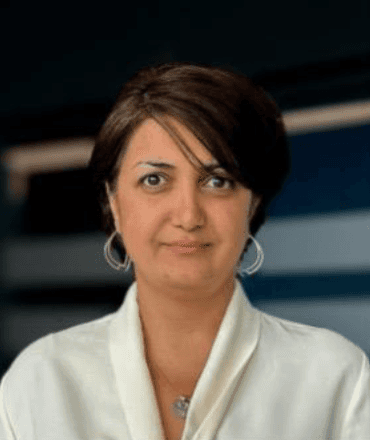
Dr. Filip Gryspeerdt is a hepatobiliary and pancreatic surgeon at Ghent University Hospital, with a particular clinical focus on complex pancreatic surgery. His main areas of expertise include vascular resections and reconstructions for locally advanced pancreatic tumors and robotic pancreatic surgery.
He received his surgical training in Belgium, the Netherlands, and Canada. He is currently pursuing a PhD focused on computer vision–based performance evaluation and clinical outcome prediction in robotic pancreaticoduodenectomy.
Alongside his clinical and research activities, he is actively involved in the education and training of surgical residents, fellows, and medical students.
Who are the mentors?
Prof. Dr. Niki Rashidian
Prof. Dr. Niki Rashidian is Director of Research and Skill Development at Orsi Academy, Hepatobiliary and Pancreatic Surgeon at Ghent University Hospital, and Professor of Innovative Computer-Assisted Surgery at Ghent University. Her clinical and research activities are centered around robotic surgery, surgical education, and the development and evaluation of innovative technologies that can enhance surgical training and patient care.
She holds a PhD in Proficiency-Based Progression (PBP) training and has a particular interest in structured curricula, objective performance assessment, faculty development, and technology- enhanced robotic surgery education. At Orsi Academy, she leads the development and implementation of evidence-based training pathways and explores how innovations such as surgical data science, artificial intelligence, simulation, and digital assessment tools can be integrated into training, with the goal of ensuring that trainees demonstrate proficiency before progressing to operate on patients.
Dr. Filip Gryspeerdt
Dr. Filip Gryspeerdt is a hepatobiliary and pancreatic surgeon at Ghent University Hospital, with a particular clinical focus on complex pancreatic surgery. His main areas of expertise include vascular resections and reconstructions for locally advanced pancreatic tumors and robotic pancreatic surgery.
He received his surgical training in Belgium, the Netherlands, and Canada. He is currently pursuing a PhD focused on computer vision–based performance evaluation and clinical outcome prediction in robotic pancreaticoduodenectomy.
Alongside his clinical and research activities, he is actively involved in the education and training of surgical residents, fellows, and medical students.
Could this be you?
We are looking for:
Motivated, reliable students, ready to commit for the full academic year: the estimated workload will be about 1–2 days per week.
Students in at least their second bachelor year, preferably with a background in medicine or biomedical engineering, though other biomedical backgrounds are very welcome too.
Students fascinated by surgery and the growing role of AI in the operating room.
Students with a solid grasp of surgical anatomy and procedural steps, or eager to learn it.
Meticulous, patient and consistent workers; good annotation lives and dies by attention to detail.
Team players who enjoy collaborating closely with surgeons and engineers.
No annotation experience needed! The training will be provided by the project mentors.
Could this be you?
We are looking for:
Motivated, reliable students, ready to commit for the full academic year: the estimated workload will be about 1–2 days per week.
Students in at least their second bachelor year, preferably with a background in medicine or biomedical engineering, though other biomedical backgrounds are very welcome too.
Students fascinated by surgery and the growing role of AI in the operating room.
Students with a solid grasp of surgical anatomy and procedural steps, or eager to learn it.
Meticulous, patient and consistent workers; good annotation lives and dies by attention to detail.
Team players who enjoy collaborating closely with surgeons and engineers.
No annotation experience needed! The training will be provided by the project mentors.
Could this be you?
We are looking for:
Motivated, reliable students, ready to commit for the full academic year: the estimated workload will be about 1–2 days per week.
Students in at least their second bachelor year, preferably with a background in medicine or biomedical engineering, though other biomedical backgrounds are very welcome too.
Students fascinated by surgery and the growing role of AI in the operating room.
Students with a solid grasp of surgical anatomy and procedural steps, or eager to learn it.
Meticulous, patient and consistent workers; good annotation lives and dies by attention to detail.
Team players who enjoy collaborating closely with surgeons and engineers.
No annotation experience needed! The training will be provided by the project mentors.
Only two students will join this project,
will one of them be you?
Applications open at the start of the academic year. When you're ready, submit your CV and a short motivation through our application form.
Only two students will join this project, will one of them be you?
Applications open at the start of the academic year. When you're ready, submit your CV and a short motivation through our application form.
Only two students will join this project, will one of them be you?
Applications open at the start of the academic year. When you're ready, submit your CV and a short motivation through our application form.